
What is Cloud Computing? - Cloud Computing Services, Benefits, and Types - AWS
AWS breaks down the building blocks and tradeoffs behind cloud adoption for different business needs.
HYHUB curates vendor and industry articles on cloud computing, IT, data quality, storage efficiency and sector integration.
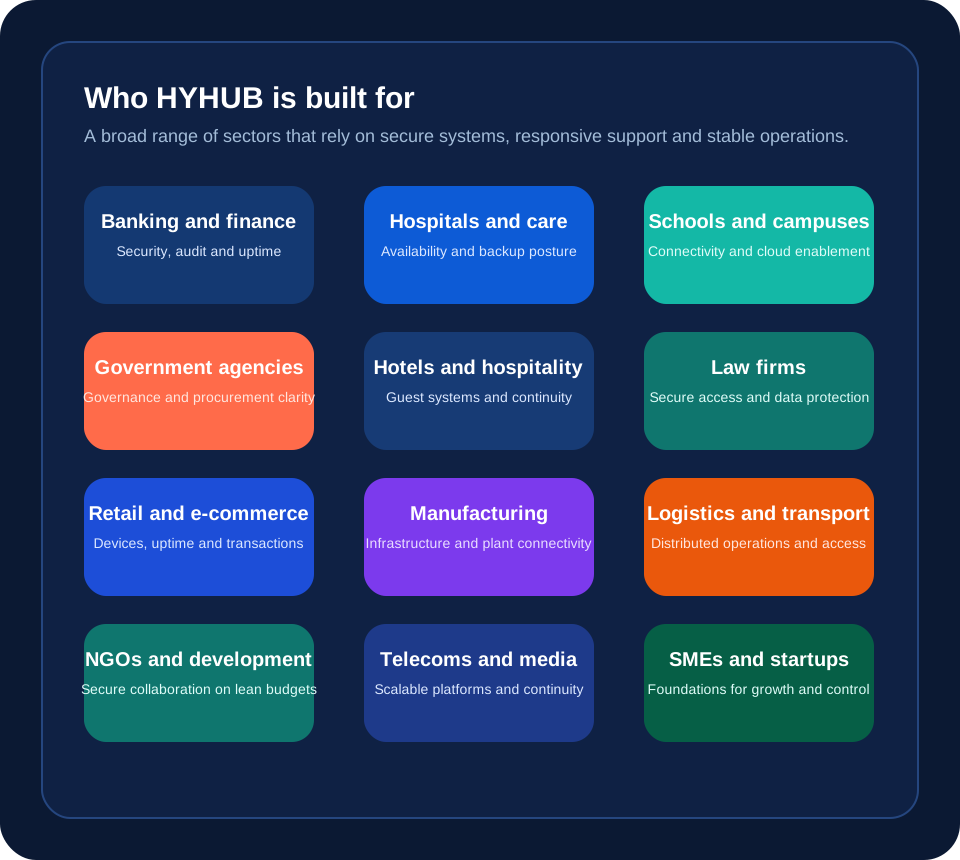
These are practical overviews of cloud, IT and infrastructure choices from AWS, Google Cloud, Microsoft, Cisco and Meta.
AWS breaks down the building blocks and tradeoffs behind cloud adoption for different business needs.
Google Cloud explains the practical advantages teams get when workloads move to a managed platform.
This is a second Google Cloud read for leaders who want a plain-language view of cloud fundamentals.
Microsoft frames cloud computing around scale, resilience and modern application delivery.
Cisco's IT overview is a useful primer for the operational side of infrastructure and support.
Meta shows how its infrastructure keeps evolving as AI and scale change the operating model.
These reads are useful when the issue is messy data, weak governance, fragmented storage or wasted infrastructure capacity.
Good governance is what stops data from becoming inconsistent, duplicated or hard to trust.
This is a simple reference for understanding why inaccurate data creates business risk.
This is a broader reference for teams trying to organize, govern and use data more effectively.
AWS shows how cloud storage can reduce local storage pressure and physical infrastructure clutter.
Google Cloud explains how teams store and manage files without relying on cramped on-premises systems.
Microsoft's storage overview is useful when the goal is to reduce local hardware overhead and space usage.
Meta shows how large environments structure data movement so it remains usable at scale.
A storage-focused read on density, capacity planning and reducing wasted rack space.
Financial services, healthcare and education all benefit when cloud platforms connect systems that used to live apart.
AWS outlines why financial services firms benefit from integrated cloud platforms and controls.
AWS shows how cloud helps connect clinical, operational and patient-facing systems.
Google Cloud highlights how schools can centralize collaboration and service delivery in one place.
